
Should a Senior Choose an E-Bike or an Electric Trike?
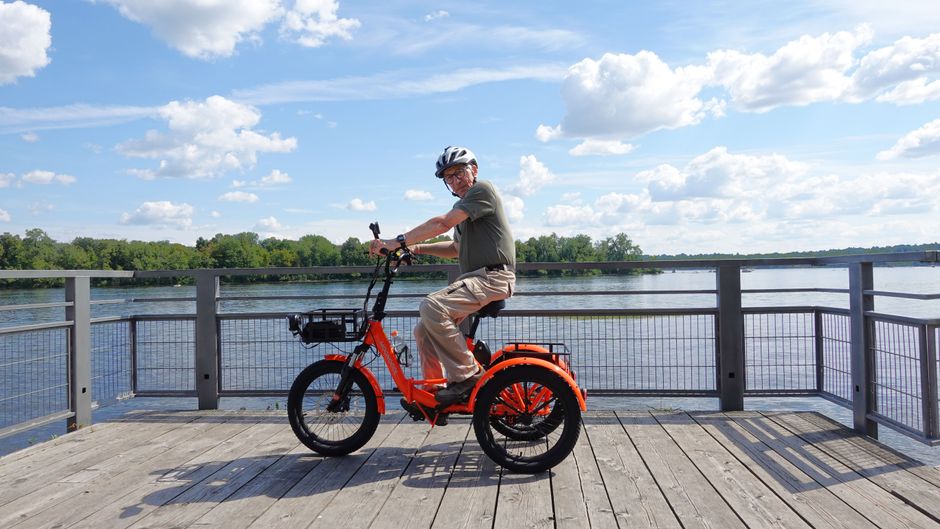
Choose a low step-through e-bike when the rider can balance, look over a shoulder, brake promptly, and handle its weight; choose an electric trike when standing stability, easy mounting, or cargo capacity matters more. A trike removes the need to balance at a stop, not the need to learn careful turns. Test rides, low assist settings, and a transport plan decide the purchase.
Should a senior choose an e-bike or an electric trike?
A senior should choose the machine that matches present control, not the machine that looks easiest from across a showroom.
A step-through e-bike is still a two-wheeler. It asks the rider to balance while starting and stopping, turn the head to scan behind, and steer through changing surfaces. Harvard Health Publishing says e-bikes are probably not appropriate for people with severe vision or balance problems because these skills remain essential.
Its advantage is familiar motion. Pedal assist reduces the work of getting moving and climbing, and Harvard Health reports that it reduces joint compression for people with joint pain, diminished strength, or reduced endurance. A Class 1 model stops assisting at 20 mph. That is a sensible ceiling to discuss during a test ride. Speed is not stability.
An electric trike changes the first problem. It stands at rest. The Mineta Transportation Institute's 2026 report lists greater stability, easier mounting and dismounting, medical issues, groceries, and riding with another person among reported reasons older adults own adult trikes. It is the stronger starting point when the rider struggles to hold a two-wheeler upright at a stop.
Use this short decision tree.
| Rider need | Best starting option | What to test |
|---|---|---|
| Reliable balance and comfortable two-wheel handling | Low step-through e-bike | Start, stop, shoulder check, signal, and brake |
| Cannot comfortably balance while stopped or needs easier mounting | Electric trike | Turning line, corner speed, braking, and storage |
| Needs a lower, seated position or does not suit either upright option | Recumbent trike | Seat transfer, reach to controls, turning space, and transport |
The recumbent choice needs an especially thorough test ride. The provided research does not compare recumbent trikes with upright trikes for fall prevention, so public data does not settle that choice.
Are electric trikes actually safer for riders with balance problems?
Electric trikes are safer at a standstill for riders with balance problems because they do not require the rider to hold a two-wheel balance point, but they do not erase riding risk.
The difference is sharp at the curb, driveway, and stop sign. A trike prevents the routine tip-over caused by putting a foot down late or losing balance while waiting. That benefit does not turn the machine into a no-skill vehicle.
Boston University reports that adult trikes have a learning curve: riders turn the handlebars through corners rather than leaning. The same report notes that many surveyed seniors who rode three models preferred either an adult tricycle or a side-by-side two-seat model. Stationary stability and cornering stability are different things.
Ride slowly through turns until the steering response feels predictable. Do not treat three wheels as permission to enter a corner fast. The Mineta report also identifies operator error and surface conditions as the most common primary contributors to reported falls among its older survey respondents.
Fall history belongs in the decision. In a study of older cyclists published in the Journal of Epidemiology, prior non-bicycle falls predicted future bicycle-related falls during follow-up. That finding supports a candid conversation about balance limits before choosing a two-wheel e-bike. It does not prove that a trike eliminates all falls.
What step-through height is easiest for an older rider to get on?
The easiest step-through height is the one that lets the rider mount and dismount without clearing a top tube, while keeping a comfortable reach to the bars and a slight bend in the knee at full pedal extension.
NHTSA uses 1 to 2 inches of clearance over a standard bicycle top tube as a basic fit check. A step-through frame removes that barrier, yet frame access alone is not fit. The rider must sit, reach the grips without strain, operate both brake levers, and put a foot down with control.
Mounting deserves its own test. A controlled study in Accident Analysis & Prevention found pedelecs less stable than conventional bicycles during the initial change from standing to balancing. The study reports that about 17% of pedelec injuries are falls during mounting or dismounting. Electrical help aided later acceleration, not that first unstable moment.
Test the exact bike in ordinary shoes. Mount, stop, dismount, and repeat. Then try starting seated with one foot on a pedal, as the study's stability finding supports. A low frame is useful only when the whole sequence stays calm.
How heavy is too heavy for a senior electric bike?
An e-bike is too heavy when the rider or caregiver cannot roll, steady, lift, load, or store it without strain or loss of control.
Harvard Health estimates that the average e-bike weighs about 50 pounds, compared with about 20 pounds for a conventional bicycle. That gap changes the purchase. It changes how the bike comes off a rack, crosses a threshold, turns in a garage, and recovers from a lean.
Check these points before payment:
- Roll the cycle from its storage spot to the vehicle without riding it.
- Hold it upright, use its stand if supplied, and test whether the rider can manage its controls while stopped.
- Ask the seller for the exact cycle weight, including battery and accessories.
- Confirm the vehicle carrier's stated capacity and whether it is designed for the cycle's wheelbase and shape.
- Measure the storage route, doorways, turns, and the space needed for a trike.
Larger cycles bring a second constraint. The Mineta report says adaptive cycles need higher-capacity bikeways and safe storage. A trike that fits the rider but cannot fit the home, carrier, or usual route is not a finished solution.
Practice is part of the equipment. The SiFAr randomized trial gave older adults eight 60-minute outdoor sessions across three months, covering balance, strength, braking, dismounting, technique, and traffic skills. Participants receiving training made 2.37 fewer errors on a standardized cycling course after three months than controls. NHTSA also advises practicing straight-line shoulder checks and one-handed signaling in a parking lot before traffic.
Frequently Asked Questions
What e-bike features help riders with knee pain or limited mobility?
A low step-through frame removes the top-tube barrier during mounting and dismounting. Harvard Health reports that electric assistance reduces joint compression and can help people with joint pain, reduced strength, or lower endurance. An upright, reachable riding position, a saddle that leaves a slight knee bend at full pedal extension, and brakes the rider can operate quickly complete the fit.
Can an older adult safely use a throttle on an e-bike?
A throttle does not replace riding skill. Harvard Health states that Class 2 e-bikes can use a throttle up to 20 mph, and warns that riders who cannot control a bike at 10 or 12 mph lack the skills for 20 mph. Begin on a clear, low-traffic area with conservative speed settings and practice braking before using roads.
What should a senior practice before riding an e-bike on the road?
Practice starting, stopping, braking, dismounting, looking behind while holding a straight line, and signaling with one hand in a parking lot. NHTSA gives that parking-lot practice as adult-rider guidance. The SiFAr trial found that structured outdoor training improved cycling-course performance among older adults, including people who were new e-bike riders or felt unsteady.
Sources
- Harvard Health Publishing
- National Highway Traffic Safety Administration
- Safer Cycling in Older Age Trial, BMC Geriatrics
- Journal of Epidemiology: Bicycle-Related Falls Among Japanese Older Adults
- Accident Analysis & Prevention: Mounting Stability on Pedelecs and Conventional Bicycles
- Mineta Transportation Institute
- Boston University: The Brink