
How Is AI Changing Drug Discovery and Clinical Trials?
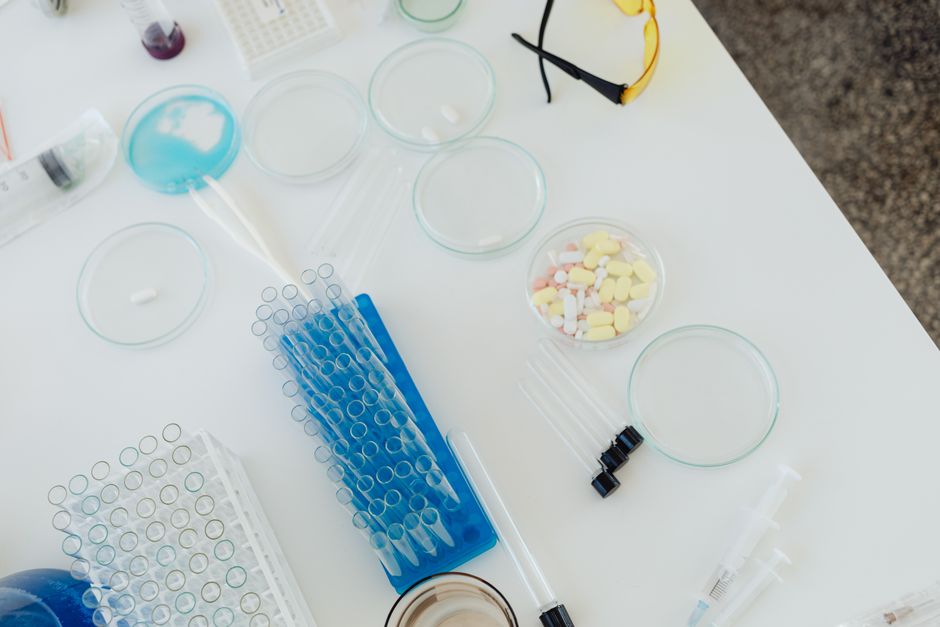
AI can help researchers find drug targets, prioritize molecules, identify possible trial participants, and analyze large datasets faster, but it cannot prove that a treatment works or is safe. Laboratory work, phased clinical trials, clinician judgment, informed consent, and regulatory review still decide whether a drug reaches patients. Treat AI as a screening and decision-support tool, not a shortcut around evidence.
Can AI really discover new drugs faster?
Yes, AI can shorten parts of early discovery, especially the work of sorting enormous biological and chemical possibilities, but faster discovery is not the same as faster approval. The practical distinction matters: a model can suggest where to look; researchers still have to make the molecule, test it in the laboratory, and generate evidence in people.
Nature reports that traditional drug development generally takes 12 to 15 years to reach marketing approval and that discovery plus preclinical development averages about six years. Its review of eight programs from AI-intensive companies found that five reached clinical trials faster than that historical average. That is a useful signal, not a finished verdict on whether the medicines will succeed.
Use the prediction-to-proof test when reading a headline about an AI-discovered medicine. Ask: did the system generate a promising hypothesis, or did the treatment show safety and effectiveness in a well-run human trial? Nature notes that industry estimates of 25% to 50% time and cost savings in preclinical work require independent verification. The molecule still needs laboratory synthesis and testing. A prediction cannot establish safety, efficacy, or approval.
| Stage | What AI can help do | What AI cannot settle |
|---|---|---|
| Discovery | Prioritize targets and molecular candidates | Whether a candidate will help patients |
| Preclinical research | Organize and analyze research data | Whether a treatment is safe and effective in people |
| Clinical trials | Support matching, monitoring, and analysis | Whether trial evidence meets standards for approval |
| Regulatory review | Support specific, assessed model uses | Replace risk-based credibility assessment |
The FDA's February 2025 discussion paper maps AI/ML uses across discovery, nonclinical research, clinical research, postmarket safety surveillance, and manufacturing. That broad map is the realistic story: AI can remove some search and sorting work across the pipeline. It does not erase the slow, necessary work of generating trustworthy evidence.
Are any AI-designed drugs approved yet?
Not based on the evidence in the sources here: the cited 2025 Nature Medicine paper states that no AI-discovered drugs had progressed through phase 3 trials at publication. That does not mean the field has produced nothing. It means patients should separate an encouraging early trial from a treatment proven through the later-stage evidence normally needed for approval.
The paper reported a randomized, double-blind, placebo-controlled phase 2a trial of rentosertib, an AI-generated small-molecule inhibitor, in 71 people with idiopathic pulmonary fibrosis over 12 weeks. At the 60 mg daily dose, mean forced vital-capacity change was +98.4 mL, compared with -20.3 mL with placebo. The authors also call for larger and longer trials, because the sample was small, geographically homogeneous, and followed for a short period.
This is the clean way to read the result: it is a clinical signal worth testing further, not a permission slip to declare the drug established. The same paper says AI-discovered drugs have had phase 2 failure rates similar to drugs discovered without AI. New software changes how candidates are found. It has not repealed the risks of developing medicines.
Regulators are drawing the same line. In January 2025, the FDA proposed a framework for AI models used to support regulatory decisions about a drug or biologic's safety, effectiveness, or quality. The agency had reviewed more than 500 drug and biologic product submissions containing AI components since 2016. Its core requirement is context: a model must be credible for its specific use, rather than assumed reliable because it uses AI.
How is AI used to match patients with clinical trials?
AI is used to scan available information for people who may meet a trial's eligibility criteria, then flag possible matches for human review. The FDA says these tools can mine clinical-trial databases, announcements, social media, literature, registries, and both structured and unstructured electronic health-record data. That can make the first pass less manual, especially when eligibility rules are detailed.
In practice, structured records can include age, sex, laboratory results, diagnosis, and disease stage. Natural-language processing can also review clinical notes for details such as other conditions, medicines, and prior treatment. A systematic review in the Journal of the National Cancer Institute Cancer Spectrum covered 10 studies, 19 datasets, and more than 50,000 patients evaluating AI for cancer-trial enrollment. Across evaluable datasets, pooled sensitivity was 90.5% and pooled specificity was 99.3%.
Those numbers deserve a second beat. The review's evidence was largely retrospective, not proof that every real-time clinic deployment will work equally well. The authors call for prospective validation, secure handling of sensitive records, inclusion of underrepresented groups, and human review. The strong version of the message is: “This tool found a possible match; let the care and study teams check it.” The weak version is: “The algorithm says you qualify.”
If a trial opportunity appears, use a short question set with the clinician or study coordinator: “Why does this trial appear relevant to me?” “Which eligibility criteria still need review?” “What information was used to identify me?” and “What are the consent and privacy terms?” Health information is not a substitute for individual medical advice. That same habit of asking what evidence supports a health decision also matters when reviewing blood tests and warning signs before taking supplements for hair shedding.
Will AI replace clinical trials or human researchers?
No. AI will not replace clinical trials or human researchers because a drug's safety and effectiveness must still be assessed through evidence from human participants, with trials proceeding in phases that involve increasing numbers of people. AI can support researchers and operations; it cannot stand in for the evidence that patients, clinicians, and regulators need.
The patient benefit is straightforward when the tool is well designed: less time spent searching, a clearer chance of finding a relevant study, and more capacity for people to handle the decisions that require judgment. The cost of getting it wrong is just as straightforward: a system trained on incomplete past data can overlook people, mishandle sensitive information, or produce an answer nobody can adequately explain.
A 2024 scoping review in the Journal of the American Medical Informatics Association included 51 studies of AI for clinical-trial recruitment and retention. It found reported gains in efficiency, recruitment, accuracy, cost savings, patient satisfaction, and interfaces, while concluding that effectiveness requires further validation. It also identifies privacy, data security, transparency, discrimination, selection bias, and limited data quality or sample size as major risks.
Run the evidence drill before you trust an AI claim: identify the task the system performed, ask whether the result was validated in the setting that matters, and find out who reviews the output before it affects care. Then replace “AI found it” with “What evidence confirms it?” That question keeps the focus where it belongs: on a treatment's effect on people.
Frequently Asked Questions
Does AI use my health data to recruit me for a trial?
It can. The FDA says AI/ML tools may use structured and unstructured electronic health-record data, along with trial databases, registries, literature, and other sources to identify potential matches. You should ask the study team what data were used, who can access them, and whether participation is optional before you proceed.
Can AI make clinical trials less biased?
It can help identify eligible people more consistently, but it can also repeat gaps in the data used to train it. The FDA warns that recruitment models based on past trial data need adequate representation of the populations likely to use the drug. A more inclusive result requires deliberate study design and human oversight, not just an algorithm.
What are the risks of AI in drug development?
Key risks include privacy and data-security problems, weak or unrepresentative training data, discrimination, selection bias, and outputs that are not transparent enough to evaluate. The Journal of the American Medical Informatics Association review also found that the reported benefits of AI recruitment tools still need further validation. A fast answer is not useful if nobody can establish that it is reliable for the decision at hand.
Sources
- U.S. Food and Drug Administration: Artificial Intelligence and Machine Learning in Drug Development
- U.S. Food and Drug Administration: Framework for AI Models in Drug and Biologic Product Submissions
- Nature Medicine: Rentosertib in Idiopathic Pulmonary Fibrosis
- Journal of the National Cancer Institute Cancer Spectrum: AI for Cancer Clinical-Trial Enrollment
- Journal of the American Medical Informatics Association: AI for Clinical-Trial Recruitment and Retention
- Nature: AI and Drug Discovery