
What Blood Tests and Warning Signs Should I Discuss Before Taking Supplements for Hair Shedding?
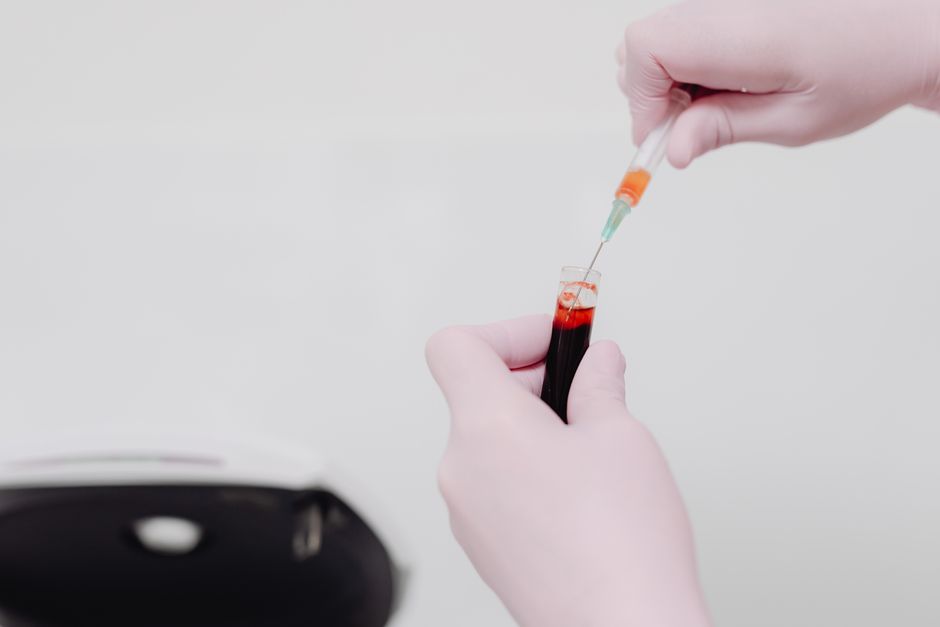
Before taking supplements for persistent hair shedding, discuss a focused workup with a clinician: a complete blood count, ferritin or iron status, thyroid testing, and selected vitamin tests such as vitamin D and B12 when your history supports them. Bring the timeline, shedding pattern, recent illness or weight loss, diet, medications, and every supplement bottle. Start with the cause, not the supplement aisle.
That sequence protects both your budget and your test results. Hair shedding is not one diagnosis. A widening part needs a different workup from sudden hair in the shower after a fever, childbirth, surgery, or major stress.
What blood tests should I ask for if my hair is thinning?
Ask the clinician whether a CBC, ferritin or iron assessment, and thyroid testing fit your pattern of hair loss; vitamin D and B12 can be sensible additions when your diet, symptoms, or clinical history make them relevant. This is a focused checklist, not a command to purchase every test or every supplement.
For diffuse hair loss, the International Journal of Trichology review states that evaluation of iron deficiency and thyroid hormone disorders is usually recommended. In its retrospective comparison, ferritin and vitamin D averages were lower in the diffuse-hair-loss group, while folate, B12, zinc, and TSH were similar between groups. Translation: broad testing can produce normal results, and normal results are still useful because they redirect the conversation.
| Bring to the appointment | Why it changes the workup |
|---|---|
| When shedding started and whether it was sudden or gradual | Excessive shedding is often noticed a few months after a trigger; gradual widening of the part points toward a different pattern. |
| Recent childbirth, illness, high fever, surgery, substantial stress, or loss of 20 pounds or more | The American Academy of Dermatology lists these as possible telogen effluvium triggers. |
| Diet changes, medications, thyroid-dose changes, and all supplements | These details help a clinician decide whether vitamin tests are relevant and whether a product could affect laboratory interpretation. |
| Photos of your part and ponytail over time | A progressively widening part, thinner ponytail, temple recession, or widespread thinning can help identify a female-pattern presentation. |
Use the appointment to make the request concrete: “My shedding began around this time. These events and products changed beforehand. Which tests will help rule in or rule out the likely causes?” That gives the clinician usable inputs instead of a vague request for “hair vitamins.”
Move faster if you have hair coming out in clumps, clear scalp symptoms, or a rapidly changing pattern. The AAD also identifies scalp infection, hormonal imbalance including PCOS, tight hairstyles, chemotherapy, and damaging hair practices as causes with different evaluations and treatments. A supplement cannot substitute for identifying which lane you are in.
Can low ferritin cause hair loss even if I am not anemic?
Low ferritin can coexist with diffuse hair loss even without anemia, but a low result does not prove it is the only cause or prove that iron will help every person. Ferritin is a reason to have a targeted clinical conversation, not an automatic reason to self-prescribe iron.
The International Journal of Trichology comparison found mean ferritin of 14.72 ng/mL in people with diffuse hair loss and 25.30 ng/mL in controls. Its authors also note conflicting studies and uncertainty about whether iron replacement benefits every patient. That is the key trade-off: the association is worth checking, but the result must be read alongside the CBC, your history, and the hair-loss pattern.
Do not confuse diffuse shedding with female pattern hair loss. According to the American Academy of Dermatology, female pattern hair loss is the most common cause of hair loss in women and can show up as a widening part, thinner ponytail, temple recession, or increasingly widespread thinning. The AAD recommends a dermatology diagnosis before treatment because other conditions can look similar.
A better script is: “Could ferritin or iron status be part of this, and if it is low, what treatment and follow-up make sense for me?” That question respects the evidence and avoids turning one lab marker into a diagnosis.
Should I take iron or biotin before getting tested for hair loss?
No: discuss iron and biotin with the clinician before starting them, and disclose anything you already take before blood is drawn. Biotin deserves special attention because it can make several relevant laboratory results falsely high or falsely low.
The NIH Office of Dietary Supplements says evidence for biotin supplements and hair health is limited to a small number of case reports and small studies. It also reports that high supplemental biotin can interfere with thyroid hormone and 25-hydroxyvitamin D testing; even one 10 mg dose affected thyroid testing within 24 hours in one study.
The problem is not theoretical. In a small JAMA-linked study of six healthy adults taking 10 mg daily for seven days, biotin interference appeared in 9 of 23 biotinylated assays, including assays for TSH, T3, T4, vitamin D, and ferritin. The authors concluded that oral biotin can be associated with false hormone and nonhormone assay results.
Use the clean handoff: “Here is every vitamin, gummy, powder, and hair product I take, including the dose and when I last took it. Should any affect my tests?” That is more useful than stopping or starting products on guesswork. If testing shows a deficiency, the clinician can recommend a plan built around the actual result.
Frequently Asked Questions
Can thyroid problems cause diffuse hair shedding?
Yes. The American Academy of Dermatology lists thyroid disease as a cause of thinning hair or hair that may come out in clumps during brushing, and states that treating the thyroid disease can reverse the hair loss. That makes thyroid testing a useful clinician discussion for diffuse shedding, especially when the timing or medication changes point in that direction.
Why is my hair falling out if my vitamin levels are normal?
Normal vitamin results do not rule out other causes. The American Academy of Dermatology lists stress, illness, surgery, childbirth, substantial weight loss, thyroid disease, hereditary hair loss, hormonal imbalance, scalp infection, tight styles, and damaging hair practices among possible causes. The pattern and timeline determine the next useful question.
How do I know whether I have telogen effluvium or female pattern hair loss?
Telogen effluvium often presents as a specific onset of increased shedding a few months after a trigger, while female pattern hair loss typically develops gradually over years with a widening part, thinning ponytail, temple recession, or more widespread thinning. The American Academy of Dermatology notes that a person can have both, so a dermatology assessment can prevent treating the wrong problem.
Your next move is simple: write down the month shedding started, the events in the preceding few months, and every medication and supplement. Then use that one-page record to ask for a focused evaluation. The goal is not the biggest supplement routine. It is the clearest next decision.
Sources
- American Academy of Dermatology: Hair Shedding
- American Academy of Dermatology: Female Pattern Hair Loss
- American Academy of Dermatology: 18 Causes of Hair Loss
- NIH Office of Dietary Supplements: Biotin Fact Sheet for Health Professionals
- JAMA / PubMed Central: Biotin Interference in Clinical Immunoassays
- International Journal of Trichology: Serum Ferritin and Vitamin D in Diffuse Hair Loss